AI agent development means building autonomous LLM systems that plan steps, call tools (APIs, CRM, search, documents), and finish tasks with logs and risk controls. VivaCoding designs agents around a business scenario: goals, tools, RAG, guardrails, and human-in-the-loop — an execution layer, not a chat demo.
Key takeaways
- You need multi-step work across systems, not text replies alone.
- APIs or access exist and “done” criteria are clear.
- You can run a pilot with KPIs and human escalation points.
What is AI agent development
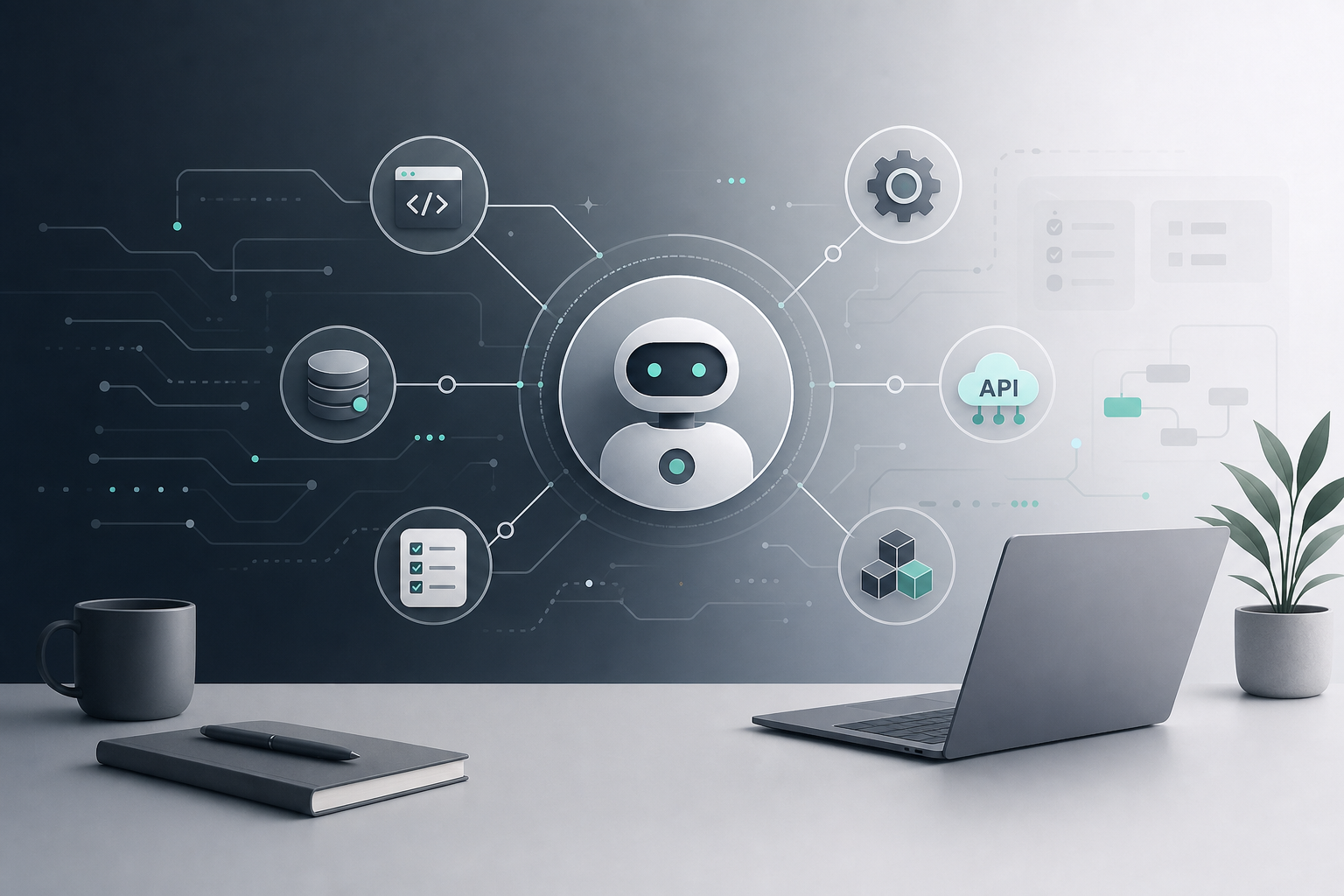
An AI agent is a software layer on top of an LLM: system instructions, memory/state, tools and RAG, orchestration, and safety policies. Unlike a FAQ bot, the agent chooses which tool to call and in what order until the goal is done or a human must take over. Typical stack: Python/Node, an LLM provider, a vector store, an API gateway, plus token and quality monitoring.
How it differs
A chatbot replies in conversation by script or knowledge base. A Telegram Mini App provides UI inside the messenger. An AI agent acts: updates CRM, creates tickets, pulls data across systems, and closes a workflow.
When it fits
- You need multi-step work across systems, not text replies alone.
- APIs or access exist and “done” criteria are clear.
- You can run a pilot with KPIs and human escalation points.
When it doesn’t
Without a process owner and allowed actions, start with policy and access — otherwise the agent stays a demo without production safety.
How we work
- Scenario, KPIs, and agent responsibility boundaries
- Architecture: LLM, memory, RAG, tools, guardrails
- API/CRM integrations and access policy
- Real-case tests, eval, and anti-hallucination checks
- Launch, logs, cost monitoring, and iteration
Related services
FAQ
How is an AI agent different from a chatbot?
A bot replies. An agent plans and calls tools: CRM, tickets, search, documents. For FAQ-only needs, a chatbot is enough.
Do we need RAG?
Yes if answers must follow your policies and knowledge base. Without RAG, models invent corporate facts.
How do you control agent actions?
Tool allowlists, limits, human confirmation on risky steps, and a full log of input→decision→action→result.
How long is a pilot?
Usually 3–8 weeks: access, a prototype on 1–2 scenarios, quality eval, and a token-cost report.